Prescribed Fire
Prescribed Fire Program at the Placer Resource Conservation District
Fire Suppression in California
Fire suppression in California's Sierra Nevada represents one of the most consequential land management shifts in the region's ecological history. For thousands of years, Indigenous peoples including the Miwok, Mono, Maidu, Paiute, and Washoe deliberately set low-intensity cultural burns across Sierra landscapes to cultivate food crops like acorns and bulbs, drive game, maintain meadows, encourage basketry materials such as redbud and sourberry, and reduce hazardous fuel buildup beneath pine and oak forests. These frequent, low-severity fires kept forest understories open and maintained a mosaic of fire-adapted ecosystems.
Beginning in the mid-1800s, however, the Gold Rush, forced removals, massacres, and state-sanctioned violence devastated Indigenous populations and severed their relationships with ancestral lands, while subsequent federal and state policies, most notably the U.S. Forest Service's "10 a.m. policy" of 1935, which mandated suppression of all fires by the morning after detection, criminalized cultural burning and aggressively extinguished both natural and intentional fires.
Over the following century, this exclusion of fire allowed unprecedented accumulations of dense undergrowth, ladder fuels, and an overstocking of small-diameter trees in forests that had historically supported only 40 to 60 large trees per acre. Combined with a hotter, drier climate driven by anthropogenic warming and prolonged drought, these fuel-loaded landscapes now burn at intensities and severities far outside historical norms, producing the megafires such as the Rim, Creek, Dixie, and Caldor fires, that incinerate soils, kill mature fire-resistant trees like ponderosa pine and giant sequoia, and convert conifer forests into shrublands that may not recover for centuries.
In recent years, agencies have increasingly partnered with tribes to restore prescribed and cultural fire, recognizing that Indigenous fire stewardship is essential to the long-term resilience of Sierra Nevada ecosystems.
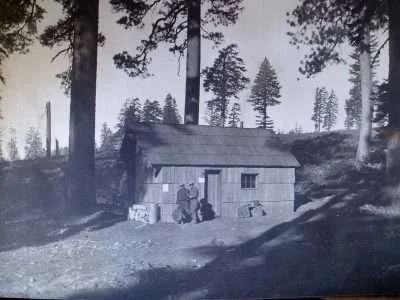
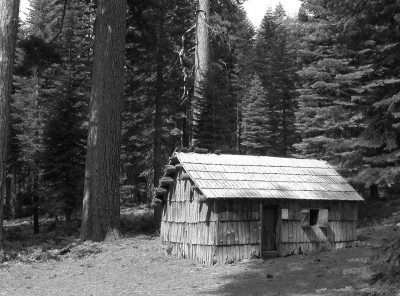
Left 1915 The pictures above depict the Bear Creek Fire Guard Station in Plumas County. Right 2002
The Role of Prescribed Fire in Forest Management
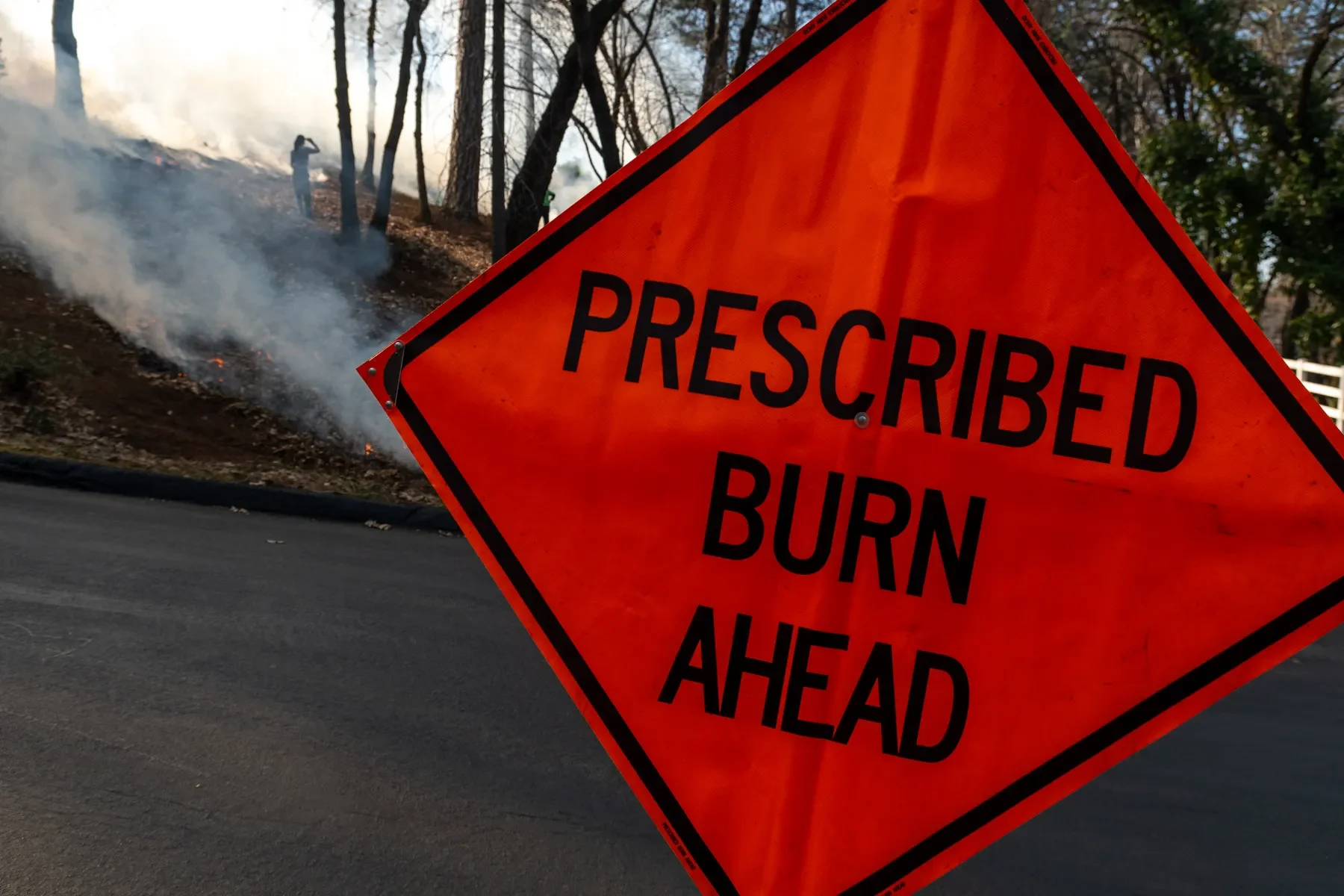
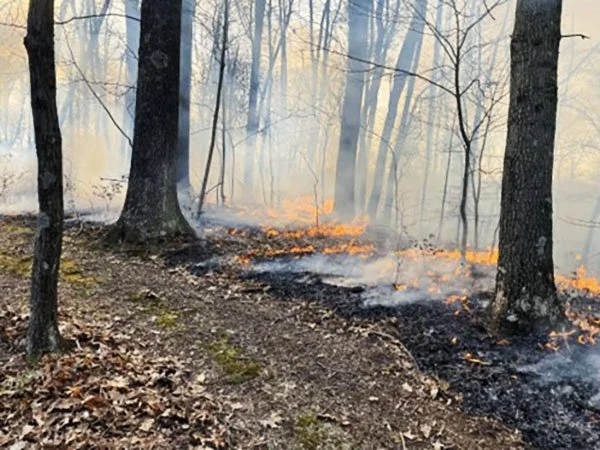
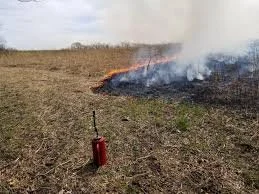
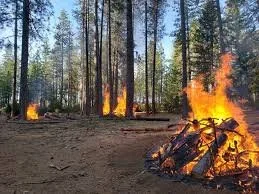
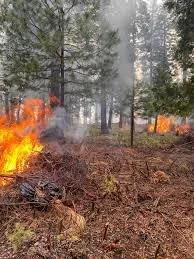
Fuels reduction: Fuels reduction through prescribed fire involves the intentional, controlled application of low-intensity fire to forests, grasslands, and shrublands under carefully chosen weather and moisture conditions to reduce accumulated surface litter, brush, ladder fuels, and small-diameter trees. By consuming these hazardous fuels in a planned manner, prescribed burns lower the likelihood that future wildfires will escalate into high-intensity, crown-replacing events, while also recycling nutrients, stimulating fire-adapted vegetation, and improving wildlife habitat. When applied repeatedly across a landscape, prescribed fire restores the structural conditions and ecological processes that frequent low-severity fire historically maintained, making forests more resilient to drought, insects, and climate-driven megafires.
Control of species composition: Control of species composition uses prescribed fire as a selective tool to favor desired plant species while suppressing undesirable ones, taking advantage of differences in bark thickness, rooting depth, seed biology, and seasonal vulnerability among species. For example, dormant-season burns in Sierra Nevada forests can reduce shade-tolerant, fire-sensitive species like white fir and incense cedar that have encroached during decades of fire exclusion, thereby releasing fire-adapted pines, oaks, and giant sequoia whose regeneration depends on open, sunlit conditions and mineral soil seedbeds. By adjusting burn timing, frequency, and intensity, land managers can steer plant communities toward historically dominant, fire-resilient species and away from invasive grasses or encroaching conifers that increase long-term fire hazard.
Managing for biodiversity: Managing for biodiversity through prescribed fire creates a heterogeneous mosaic of burned and unburned patches, varying in age, intensity, and structure, which supports a wider range of plant and animal species than any uniform landscape can. This pyrodiversity sustains habitat for fire-dependent species such as black-backed woodpeckers that forage in recently burned snags, pollinators that thrive on post-fire wildflower blooms, and small mammals that rely on the open understories and edge habitats fire creates, while also maintaining rare fire-adapted plants whose seeds require heat or smoke to germinate. By reintroducing fire as an ecological process, managers preserve the evolutionary conditions under which Sierra Nevada species diversified, counteracting the homogenization and species loss that follow long periods of fire exclusion.
Health of residual trees: Prescribed fire improves the health of residual trees by reducing competition for water, nutrients, and sunlight, thinning out dense understory saplings and shrubs so that mature, fire-resistant trees can access the resources they need to thrive, especially during drought. Lower stand densities and reduced fuel loads also decrease the risk that future wildfires will scorch crowns or girdle trunks, while the mild heat of a controlled burn can kill bark beetles, fungal pathogens, and mistletoe that weaken overstory trees. The result is a more vigorous residual stand of large, deep-rooted pines, oaks, and sequoias with thicker bark, healthier crowns, and greater resilience to insects, disease, drought, and high-severity fire.
Carbon effects: Prescribed fire produces short-term carbon emissions as surface fuels, brush, and small trees are consumed, but it substantially reduces the risk of far larger, uncontrolled carbon releases from high-severity wildfires that can incinerate entire forests in a single event. By keeping mature, large-diameter trees alive (the very trees that store the majority of a forest's carbon over centuries) prescribed burning protects long-term carbon stocks even as it emits a smaller pulse of carbon up front. Research in the Sierra Nevada suggests that landscapes treated with repeated prescribed fire ultimately retain more stable, resilient carbon reserves than fire-excluded forests, which accumulate dense fuels that eventually combust catastrophically and shift forests from carbon sinks to carbon sources.
Planning and Preparation
Burn Plans
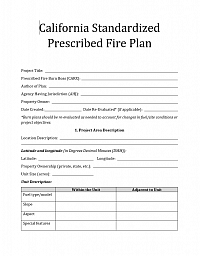
A burn plan is the foundational document that translates ecological objectives into a safe, executable prescribed fire operation, and in California most practitioners now use the California Cooperative Prescribed Fire template developed through the California Prescribed Fire Council, or comparable templates from CAL FIRE, the U.S. Forest Service (FS-2188), or local Prescribed Burn Associations (PBAs). A complete burn plan articulates the burn objectives (such as fuel reduction, habitat enhancement, or cultural restoration), describes the unit's vegetation, topography, and fuel models, and specifies the prescription window—the acceptable ranges of temperature, relative humidity, wind speed and direction, fuel moisture, and mixing height under which the burn may proceed. The plan also defines ignition patterns (strip head fire, backing fire, flanking, or spot ignition), holding and contingency resources, smoke management strategy, public notification procedures, communication frequencies, medical and evacuation plans, and go/no-go criteria. Map-making is central to the plan and typically includes a vicinity map, a unit map showing control lines, ignition sequence, water sources, escape routes and safety zones (LCES), nearby smoke-sensitive receptors, and values at risk such as structures, power lines, or sensitive habitat. Many practitioners build these maps in CalTopo, Avenza, or QGIS, layering CAL FIRE FRAP fuel data, parcel boundaries, and weather station locations. Plans are typically reviewed and signed by a qualified burn boss (RXB2 or RXB1) before implementation.
Permitting and Regulations
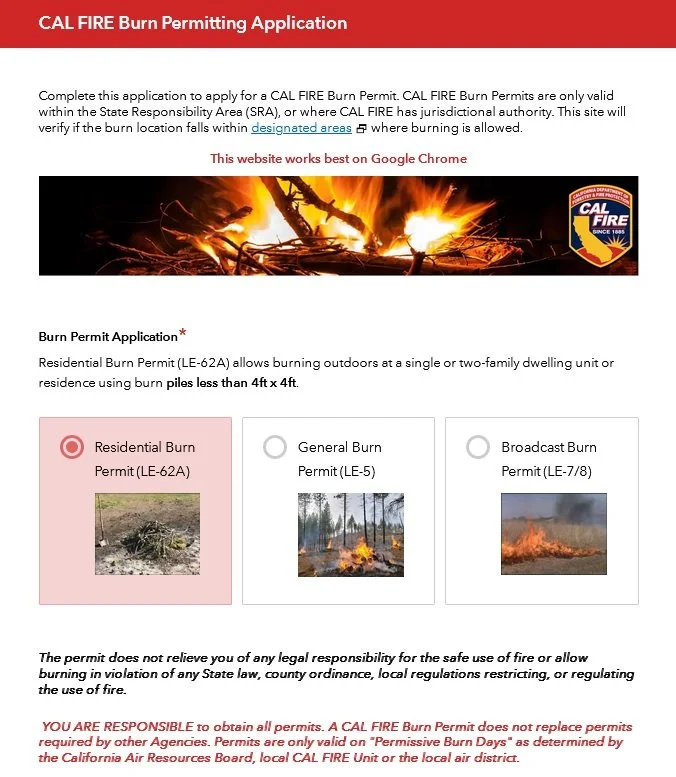
California has one of the most layered prescribed fire regulatory environments in the country, and navigating it requires coordination with multiple agencies. At minimum, every burn requires a CAL FIRE burn permit (LE-5 or local equivalent) during fire season, which is issued by the local CAL FIRE unit or, in State Responsibility Area counties, by the relevant Air Pollution Control District or Air Quality Management District. Each district administers its own Smoke Management Program under California Air Resources Board (CARB) Title 17 regulations, and makes authorization on a "permissive burn day" determined daily by CARB and the local district based on meteorology and air quality forecasts.
California's SB 332 (2021) significantly reduced liability barriers for cultural and prescribed burning, and SB 310 (2021) formally recognized tribal cultural fire practitioners. Practitioners should also notify local fire agencies, dispatch centers, and adjacent landowners well in advance, and consult the CARB daily burn-day map and local district websites the day of ignition.
Liability and Insurance
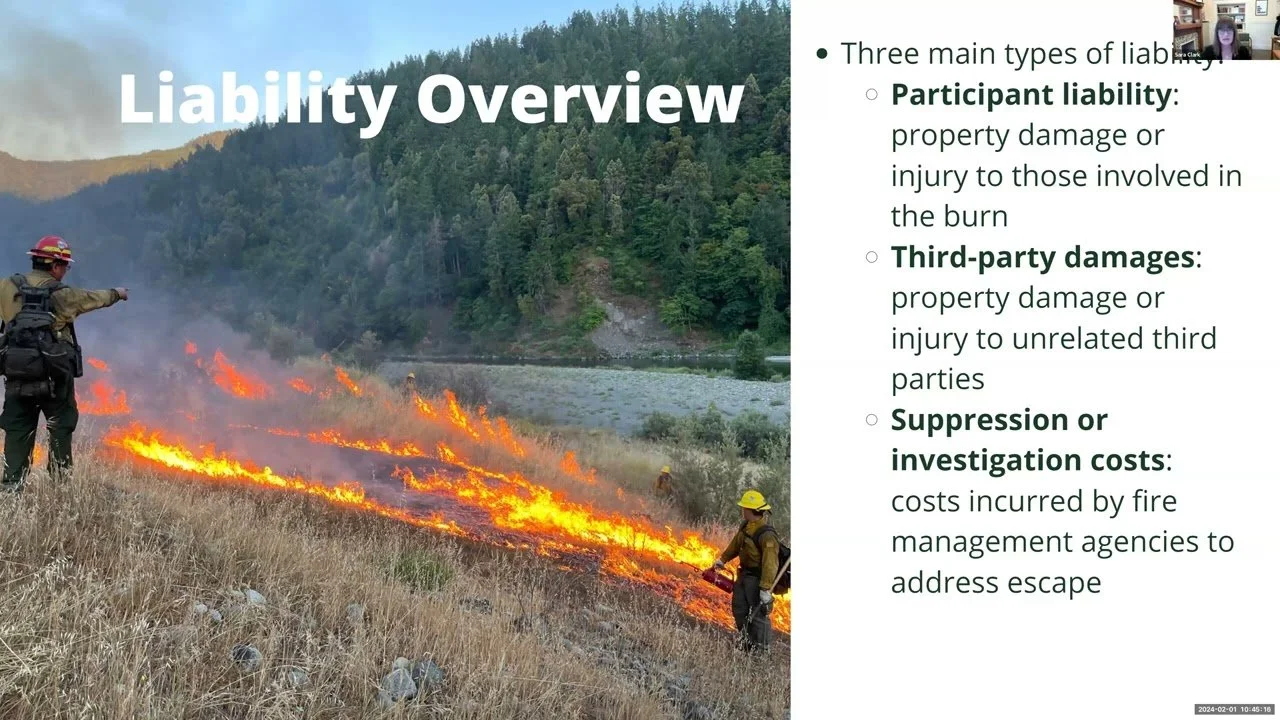
Liability has historically been the single greatest barrier to expanded prescribed burning in California, but the legal landscape has shifted substantially in recent years. Under SB 332, private burners, tribes, and cooperating agencies are shielded from liability for suppression costs and damages from escaped prescribed or cultural fires unless their conduct rises to the level of gross negligence. This is a meaningful protection given the previous simple-negligence standard that exposed burners to potentially ruinous costs. Nonetheless, practitioners remain responsible for adhering to their approved burn plan, conducting burns within prescription, and exercising reasonable care; deviations from the plan can void liability protections. Insurance options have expanded through the California Prescribed Fire Claims Fund, established in 2022, which provides up to $2 million per incident in coverage for non-agency burners (private landowners, NGOs, PBAs, and cultural practitioners) when traditional insurance is unavailable or unaffordable. Burners should still consult attorneys and insurance brokers familiar with prescribed fire, document training and qualifications (NWCG or California-equivalent certifications such as RXB2, FFT2, or ICT5), maintain detailed records of plan approvals and weather observations, and ensure that contractors and cooperators carry their own appropriate coverage. Cultural burn practitioners working under tribal sovereignty or in partnership with tribes have additional protections recognized under SB 310 and emerging state-tribal agreements.
Unit Preparation
Unit preparation is the on-the-ground work that physically readies a burn unit for safe ignition and is often the most labor-intensive phase of the project. Control lines, the boundaries that hold fire within the unit, are established by leveraging existing features like roads, streams, rock outcrops, or wet meadows wherever possible, and supplementing them with constructed lines such as hand-cut scratch lines down to mineral soil, dozer lines, mowed strips, or wet lines pumped from engines. In Sierra Nevada timber stands, hand crews using chainsaws, McLeods, and Pulaskis typically build a 3-to-10-foot-wide line cleared of surface litter and overhanging fuels, often supplemented by a "black line" pre-burned along the interior edge to widen the buffer before main ignition. Hazard mitigation includes felling or flagging snags within striking distance of control lines, identifying and protecting cultural resources and sensitive plants, removing or wetting down stumps and logs that could harbor lingering combustion, and securing any structures. Ladder fuel reduction, the removal of small trees, low branches, and shrubs that could carry surface fire into the canopy, is typically accomplished through pre-burn mastication, hand thinning, lop-and-scatter, or pile burning in the seasons leading up to the broadcast burn, and is especially critical in fire-excluded Sierra forests where decades of ingrowth have created continuous vertical fuel ladders. Final preparation includes pre-positioning water resources (engines, pumps, hose lays, and bladder bags), confirming radio communications, posting signage and road closures, and conducting a test fire on burn day to verify that fire behavior matches the prescription before committing to full ignition.