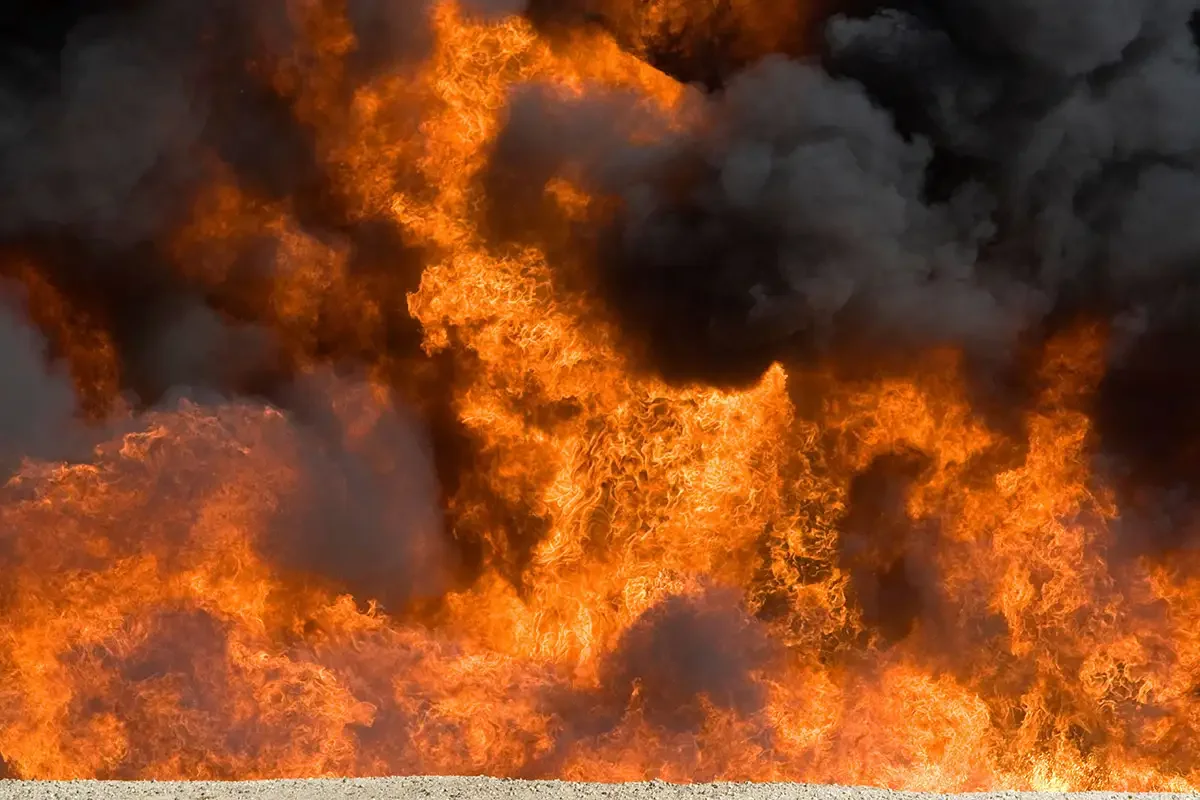
Fire science is the multidisciplinary study of fire behavior, prevention, and suppression, combining chemistry, physics, and engineering to manage fire risks. It focuses on understanding how fires start and spread, aiming to protect lives and property through fire safety, investigation, and advanced suppression techniques.
Heat
Live and dead vegetation that is consumed during a burn is referred to as fuel. The amount of fuel is an important factor in determining the expected fire behavior during a prescribed burn. In forests where fire historically burned every few years, fuel levels remained low. Fire prevented dead vegetation from accumulating and created gaps by consuming trees and shrubs.
Because there wasn’t much fuel to burn when fires were frequent, fire intensity was low and fires burned at low severity, killing few trees. Generally, fires are more severe where they are infrequent and less severe where they are more frequent. Prescribed burners assess the amount of fuel present to anticipate the behavior of the fire. Mechanical work is sometimes needed to lower the amount of fuel to acceptable levels.
The amount of fuel is one aspect that affects fire. The size of fuel is also an important consideration in a prescribed burn. Smaller pieces heat up faster and burn faster, while larger pieces are harder to ignite. In prescribed burning, the difference between these fine fuels (called 1-hour fuels) and larger fuels (10-hour and 100-hour fuels) becomes very important. Fire moves much faster in fine fuel like grass than in shrubs, but it also doesn’t last as long. On the other hand, flame length is greater in shrubs, even if fire moves slower.
Oxygen
Oxygen availability is a critical factor that affects fire behavior, though it is rarely a limiting factor in wildland fires since the atmosphere naturally contains about 21% oxygen. In most outdoor fire conditions, there is more than enough oxygen present to support combustion. However, oxygen availability can influence fire intensity and completeness of combustion in specific situations.
In densely packed fuel beds or under heavy duff layers, oxygen may become temporarily depleted in localized areas, causing fuels to smolder rather than flame. This smoldering combustion produces more smoke and burns less completely than flaming combustion. Conversely, when wind supplies fresh oxygen to a fire, it can significantly increase flame length and rate of spread by ensuring complete combustion of available fuels.
During prescribed burns, oxygen availability is generally not a variable that managers can control directly, unlike ignition timing or weather windows. However, understanding how fuel arrangement affects air circulation helps explain why loosely packed fuels burn more vigorously than tightly compacted ones likethe spaces between fuels allow oxygen to reach all burning surfaces. During large prescribed fires, burn bosses may observe smoke color and behavior as indicators of combustion efficiency, with clean-burning fires suggesting adequate oxygen and heavy, dark smoke indicating oxygen-starved smoldering in certain fuel layers.
EMBERS – Flying embers are small, hot, and often smoldering or glowing fragments of burning material, such as leaves, twigs, bark, or even small pieces of wood or coal. Embers are a major cause of home ignitions during wildfires, as they can land on roofs, in vents, or near other flammable materials, leading to fires that can quickly spread.
RADIANT HEAT – Wildfires, like any fire, release energy in the form of electromagnetic radiation, which we perceive as heat. This radiant heat travels in waves through the air, similar to how you feel the warmth from a campfire or fireplace, without requiring direct contact or the movement of air.
DIRECT FLAMES – This occurs when flames from a fire source (like a wildfire, burning vegetation, or another structure) come into direct contact with building materials, vegetation, or other flammable objects, causing them to ignite and spread the fire.
PYROLYSIS – The thermal decomposition of organic materials (like wood) into smaller, volatile compounds in the absence of oxygen, which then become flammable and ignite.
HEAT OF GASIFICATION – Refers to the amount of heat required to convert a solid material (fuel) into a gaseous state, which is a crucial step in the ignition and combustion process, especially for solid fuels.
FUEL LOADING – Refers to the amount of combustible material (fuel) present in a given area, typically measured as the weight of fuel per unit area (e.g., tons per acre), which directly influences fire behavior and intensity.
FLAME SPREAD – Refers to the rate at which flames travel across the surface of a material once ignited, often measured using tests like the ASTM E84 tunnel test, and is a crucial factor in fire safety assessments.
Topography
Topography refers to the shape and configuration of the landscape. Fire moves in different ways across the landscape in response to several topographic elements: steepness, aspect and the shape of the slope. When fire moves uphill, it preheats the vegetation above and tends to spread much faster and be more intense. Conversely, when fire is moving downhill or backing into the wind, the spread is slower and less intense because there is less preheating of the fuel. In wildfire situations, high-severity burn patches are much more common on steep slopes. This is the reason prescribed burn practitioners typically start at the top of the hill and work their way down when igniting, since this leads to lower fire intensity.
Aspect refers to the direction the slope faces. Slopes that face south get more direct sunlight and tend to be hotter and drier. Fire severity can be higher on south-facing compared to north-facing slopes for this reason.
Lastly, some landscape features like canyons and ravines can act as chimneys, funneling wind and fire in ways that can increase fire intensity and severity. Places where wind is channeled, such as mountain passes, also can increase fire intensity. This can pose a danger to firefighters and prescribed burners.
Weather
There are three main aspects of weather that affect fire behavior: wind, temperature and humidity. Wind pushes a fire along, preheating the vegetation in front of it. This is similar to the effect of slope, and much like slope, it is important when planning a prescribed burn. Typically, prescribed burns start on the upwind side and then work their way toward the downwind side. Just like burning down a slope, this is meant to keep fire intensity low.
High temperature and low relative humidity also increase the intensity of a fire. These conditions dry out the fuels, and drier fuels ignite faster and burn more completely.
Temperature and humidity change throughout the day, so choosing the appropriate time to light a prescribed burn can make a big difference in the outcome. During a prescribed burn, there is always someone monitoring weather and communicating observed changes to others on the fire. During large prescribed fires, agency meteorologists may assist in monitoring large-scale weather trends.
Fuels
Live and dead vegetation that is consumed during a burn is referred to as fuel. The amount of fuel is an important factor in determining the expected fire behavior during a prescribed burn. In forests where fire historically burned every few years, fuel levels remained low. Fire prevented dead vegetation from accumulating and created gaps by consuming trees and shrubs.
Because there wasn’t much fuel to burn when fires were frequent, fire intensity was low and fires burned at low severity, killing few trees. Generally, fires are more severe where they are infrequent and less severe where they are more frequent. Prescribed burners assess the amount of fuel present to anticipate the behavior of the fire. Mechanical work is sometimes needed to lower the amount of fuel to acceptable levels.
The amount of fuel is one aspect that affects fire. The size of fuel is also an important consideration in a prescribed burn. Smaller pieces heat up faster and burn faster, while larger pieces are harder to ignite. In prescribed burning, the difference between these fine fuels (called 1-hour fuels) and larger fuels (10-hour and 100-hour fuels) becomes very important. Fire moves much faster in fine fuel like grass than in shrubs, but it also doesn’t last as long. On the other hand, flame length is greater in shrubs, even if fire moves slower.